

 https://doi.org/10.4081/jae.2026.1935
Planar vector sequential extraction and harvesting optimization for dense quasi-spherical fruits: a low-damage and high-efficiency path balancing strategy based on improved NSGA-II
All claims expressed in this article are solely those of the authors and do not necessarily represent those of their affiliated organizations, or those of the publisher, the editors and the reviewers. Any product that may be evaluated in this article or claim that may be made by its manufacturer is not guaranteed or endorsed by the publisher.
Accepted: 1 June 2026
Published: 16 June 2026
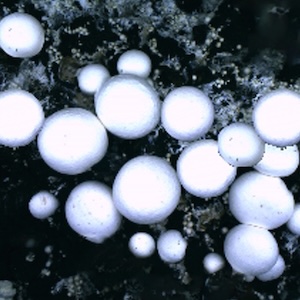
To address the challenges of excessive fruit damage and low success rates in densely clustered fruit harvesting requiring planar vector sequential extraction (a vector detachment strategy that projects 3D fruit positions onto the optimal operation plane for collision-free path planning, without restricting the end-effector to a fixed height plane), this study proposes a picking sequence optimization method based on multi-objective optimization. First, a geometric constraint model of critical tangent directions is established to determine collision-free detachment orientations for individual fruits. Subsequently, an Improved Non-dominated Sorting Genetic Algorithm II (I-NSGA-II) is developed by integrating multiple mechanisms: PSO-based extremum point injection for initial population generation, elitist selection for solution refinement, two-stage optimization (2-opt) for path smoothing, and cyclic crowding distance sorting for population diversity maintenance. This effectively resolves spatial constraints in dense fruit cluster separation while improving damage-free harvesting success rates. Experimental results demonstrate that compared with standard NSGA-II, our method achieves a significant 2.5% reduction in collision failure rates across various fruit density clusters, with picking path lengths reduced to 55% of those obtained through single-objective optimization. The proposed approach effectively solves low-damage harvesting challenges in densely aggregated fruit regions, demonstrating substantial practical value for advancing robotic harvesting technologies.
Downloads
Acciarini G, Izzo D, Mooij E, 2020. MHACO: a multi-objective hypervolume-based ant colony optimizer for space trajectory optimization. Proc. IEEE Congr. Evolutionary Computation (CEC), Glasgow; pp. 1-8. DOI: https://doi.org/10.1109/CEC48606.2020.9185694
Behnamian J, Dezfooli SM, Asgari H, 2021. A scatter search algorithm with a novel solution representation for flexible open shop scheduling: a multi-objective optimization. J Supercomput 177:13115-13138. DOI: https://doi.org/10.1007/s11227-021-03794-5
Bu L, Hu G, Chen C, Sugirbay A, Chen J, 2020. Experimental and simulation analysis of optimum picking patterns for robotic apple harvesting. Sci Hortic 261:108937. DOI: https://doi.org/10.1016/j.scienta.2019.108937
Cao X, Yan H, Huang Z, Ai S, Xu Y, Fu R, Zou X, 2021. A multi-objective particle swarm optimization for trajectory planning of fruit picking manipulator. Agronomy 11:2286. DOI: https://doi.org/10.3390/agronomy11112286
Chen Z, Lei X, Yuan Q, Qi Y, Ma Z, Qian S, Lyu X, 2024. Key technologies for autonomous fruit-and vegetable-picking robots: A review. Agronomy 14: 2233. DOI: https://doi.org/10.3390/agronomy14102233
Dai N, Fang J, Yuan J, Liu Z, 2024. 3MSP2: Sequential picking planning for multi-fruit congregated tomato harvesting in multi-clusters environment based on multi-views. Comput Electron Agric 225:109303. DOI: https://doi.org/10.1016/j.compag.2024.109303
de Moraes MB, Coelho GP, 2022. A diversity preservation method for expensive multi-objective combinatorial optimization problems using novel-first tabu search and MOEA/D. Expert Syst Appl 202:117251. DOI: https://doi.org/10.1016/j.eswa.2022.117251
Gong L, Wang W, Wang T, Liu C, 2022. Robotic harvesting of the occluded fruits with a precise shape and position reconstruction approach. J Field Robot 9:69-84. DOI: https://doi.org/10.1002/rob.22041
Hu X, Pan Z, Lv S, 2019. Picking path optimization of agaricus bisporus picking robot. Math Probl Eng 7:1-16. DOI: https://doi.org/10.1155/2019/8973153
Huang W, Miao Z, Wu T, Guo Z, Han W, Li T, 2024. Design of and experiment with a dual-arm apple harvesting robot system. Horticulturae 10:1268. DOI: https://doi.org/10.3390/horticulturae10121268
Jia HF, Chen B, Li GW, Zhang JS, 2011. Collision avoidance method in pedestrian simulation based on blockade-angle. J Jilin Univ Eng Technol Ed 41:6.
Kurtser P, Edan Y, 2020. Planning the sequence of tasks for harvesting robots. Robot Auton Syst 131:103591. DOI: https://doi.org/10.1016/j.robot.2020.103591
Laszczyk M, Myszkowski PB, 2019. Survey of quality measures for multi-objective optimization. Construction of complementary set of multi-objective quality measures. Swarm Evol Comput 48:109-133. DOI: https://doi.org/10.1016/j.swevo.2019.04.001
Lehnert C, McCool C, Sa I, Perez T, 2018. A sweet pepper harvesting robot for protected cropping environments. arXiv:1810.11920. DOI: https://doi.org/10.1109/LRA.2017.2655622
Liu C, Gong L, Yuan J, Li Y, 2022. Current status and development trends of agricultural robots. Trans Chin Soc Agric Mach 53:1-22.
Liu T, Yuan Q, Wang L, Wang Y, Zhang N, 2021. Multi-objective optimization for oil-gas production process based on compensation model of comprehensive energy consumption using improved evolutionary algorithm. Energy Explor Exploit 39:273-298. DOI: https://doi.org/10.1177/0144598720976632
Matache MG, Cristea R, Ionescu A, Epure M, 2024. Robots for harvesting solanaceae vegetables–review. Ann Fac Eng Hunedoara 22:39-47.
Ning Z, Luo L, Ding XM, Dong Z, Yang B, Cai J, et al., 2022. Recognition of sweet peppers and planning the robotic picking sequence in high-density orchards. Comput Electron Agric 196:106878. DOI: https://doi.org/10.1016/j.compag.2022.106878
Panda M, 2018. Performance comparison of genetic algorithm, particle swarm optimization and simulated annealing applied to TSP. Int J Appl Eng Res 13:6808-6816.
Pereira JLJ, Oliver GA, Francisco MB, Cunha SS Jr, Ferreira Gomes G, 2022. A review of multi-objective optimization: methods and algorithms in mechanical engineering problems. Arch Comput Methods Eng 29:2285-2308. DOI: https://doi.org/10.1007/s11831-021-09663-x
Shuai Y, Yunfeng S, Kai Z, 2019. An effective method for solving multiple travelling salesman problem based on NSGA-II. Syst Sci Control Eng 7:108-116. DOI: https://doi.org/10.1080/21642583.2019.1674220
Silwal A, Davidson JR, Karkee M, Mo C, Zhang Q, Lewis K, 2017. Design, integration, and field evaluation of a robotic apple harvester. J Field Robot 34:1140-1159. DOI: https://doi.org/10.1002/rob.21715
Tang Z, Xu L, Xie H, 2020. Picking trajectory planning of citrus based on improved immune algorithm and binocular vision. Proc. IEEE Int. Conf. Artificial Intelligence and Computer Applications, Dalian; pp. 6-10. DOI: https://doi.org/10.1109/ICAICA50127.2020.9182606
Verma S, Pant M, Snasel V, 2021. A comprehensive review on NSGA-II for multi-objective combinatorial optimization problems. IEEE Access 9:57757-57791. DOI: https://doi.org/10.1109/ACCESS.2021.3070634
Wang BX, Wang SA, Yu DH, 2016. Fruit cluster recognition and picking sequence planning based on selective attention. Trans Chin Soc Agric Mach 47:1-7.
Wang G, Zhao Y, Wang Z, Zhang Y, 2022a. Tea picking path planning based on ant colony algorithm. Proc. 41st Chinese Control Conference (CCC), Hefei; pp. 1945-1950. DOI: https://doi.org/10.23919/CCC55666.2022.9902845
Wang HY, 2018. Multi-objective optimization algorithm and its application in path planning of mobile robot. Master’s Thesis, Lanzhou University of Technology.
Wang ZH, Xun Y, Wang YK, Yang QH, 2022b. Review of smart robots for fruit and vegetable picking in agriculture. Int J Agric Biol Eng 15:33-54. DOI: https://doi.org/10.25165/j.ijabe.20221501.7232
Xiong Y, Ge Y, Grimstad L, From PJ, 2020. An autonomous strawberry‐harvesting robot: Design, development, integration, and field evaluation. J Field Robot 37:202-224. DOI: https://doi.org/10.1002/rob.21889
Xiong Y, Peng C, Grimstad L, From PJ, Isler V, 2019. Development and field evaluation of a strawberry harvesting robot with a cable-driven gripper. Comput Electron Agric 157:392-402. DOI: https://doi.org/10.1016/j.compag.2019.01.009
Xue Y, 2018. Mobile robot path planning with a non-dominated sorting genetic algorithm. Appl Sci 8:2253. DOI: https://doi.org/10.3390/app8112253
Yang S, Jia B, Yu T, Yuan J, 2022. Research on multiobjective optimization algorithm for cooperative harvesting trajectory optimization of an intelligent multiarm straw-rotting fungus harvesting robot. Agriculture 12:986. DOI: https://doi.org/10.3390/agriculture12070986
Zhang SJ, Du HT, Hou TT, 2022. Improved NSGA2 algorithm to solve the multi-objective dual-resource flexible workshop scheduling problem. Proc. IEEE Int. Conf. Artificial Intelligence and Computer Applications, Dalian; pp. 771-778.
CRediT authorship contribution
All authors contributed equally to: conceptualization, methodology, formal analysis, writing – original draft preparation, writing – review & editing, supervision. All authors read and approved the final version of the manuscript and agreed to be accountable for all aspects of the work.
Supporting Agencies
Data Availability Statement
The datasets used and/or analyzed during the current study are available from the corresponding author on reasonable request.
How to Cite

This work is licensed under a Creative Commons Attribution-NonCommercial 4.0 International License.
PAGEPress has chosen to apply the Creative Commons Attribution NonCommercial 4.0 International License (CC BY-NC 4.0) to all manuscripts to be published.